NON-TERRESTRIAL NETWORKS · SATELLITE-TO-DEVICE

Engineer the service beyond the terrestrial edge.

eSegura brings cellular architecture, RF engineering, geospatial intelligence and independent assurance to emerging NTN services—connecting ordinary user equipment, remote assets and critical operations through LEO, MEO, GEO and hybrid terrestrial/satellite systems.

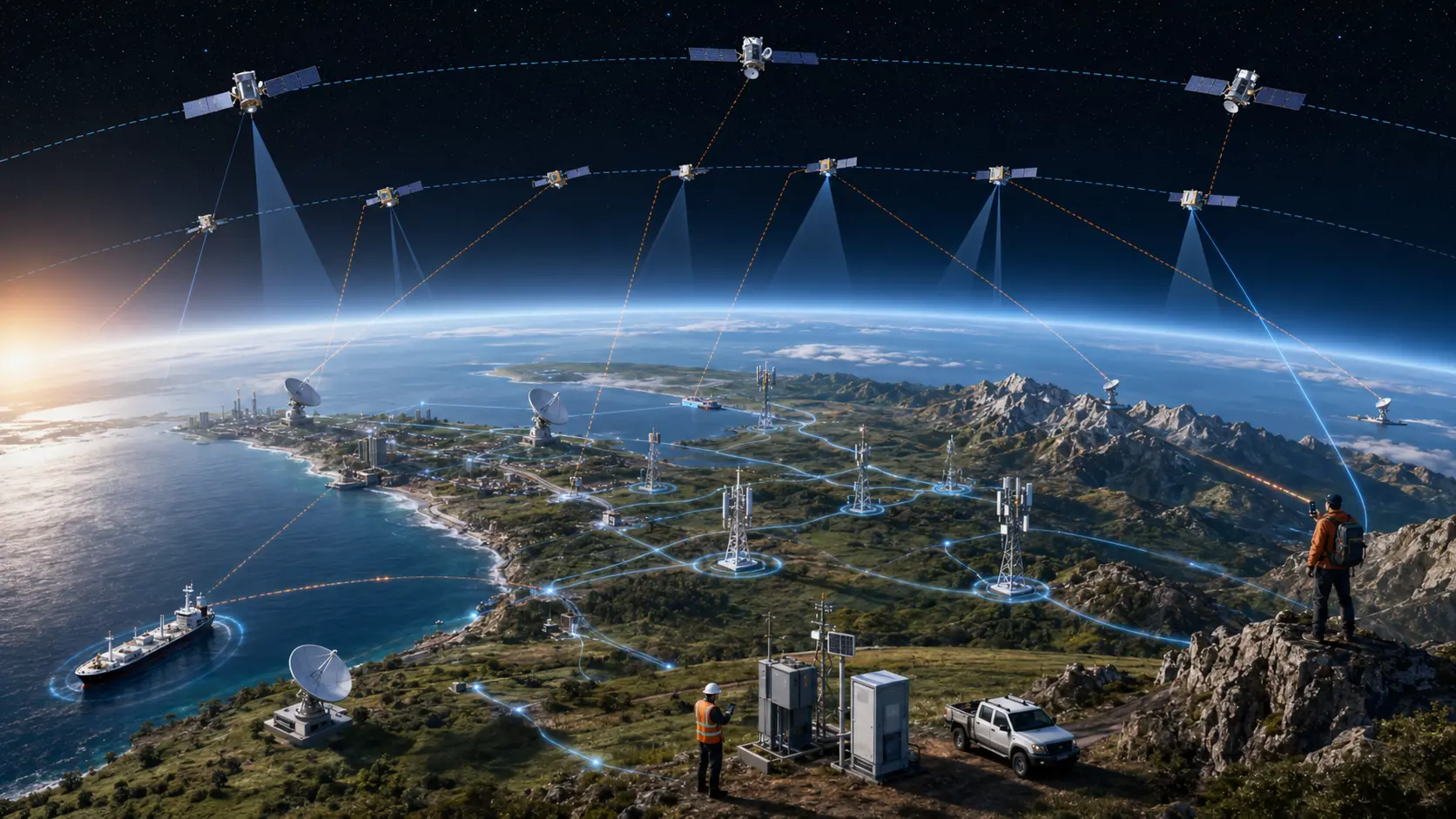
LEO, MEO and GEO satellite layers extending terrestrial connectivity to remote, maritime and critical-infrastructure environments

CAPABILITY BEFORE HYPE

From orbital architecture to user experience.

NTN changes the radio environment, but not the need for disciplined engineering: define the service, model the constraints, measure the result and separate availability from marketing coverage.

01 · ADVISE

NTN Strategy & Readiness

Use-case definition, technology landscape, standards alignment, ecosystem assessment and phased service roadmap.

  • Direct-to-device and IoT use cases
  • Terrestrial/NTN convergence strategy
  • Vendor-neutral trade studies
  • Risk, dependency and maturity assessment
02 · ENGINEER

Architecture & Feasibility

Service-chain architecture from UE and satellite payload through feeder link, gateway, core and application platform.

  • Link-budget and coverage assumptions
  • Orbit, beam and gateway considerations
  • Doppler, delay and mobility impacts
  • Resilience and interworking scenarios
03 · VALIDATE

Independent Service Assurance

Evidence-based field programs for the services commercially available now and the capabilities that follow.

  • Messaging availability and acquisition time
  • Location/sky-view dependency
  • Device and service-state behavior
  • Coverage, QoS and QoE frameworks
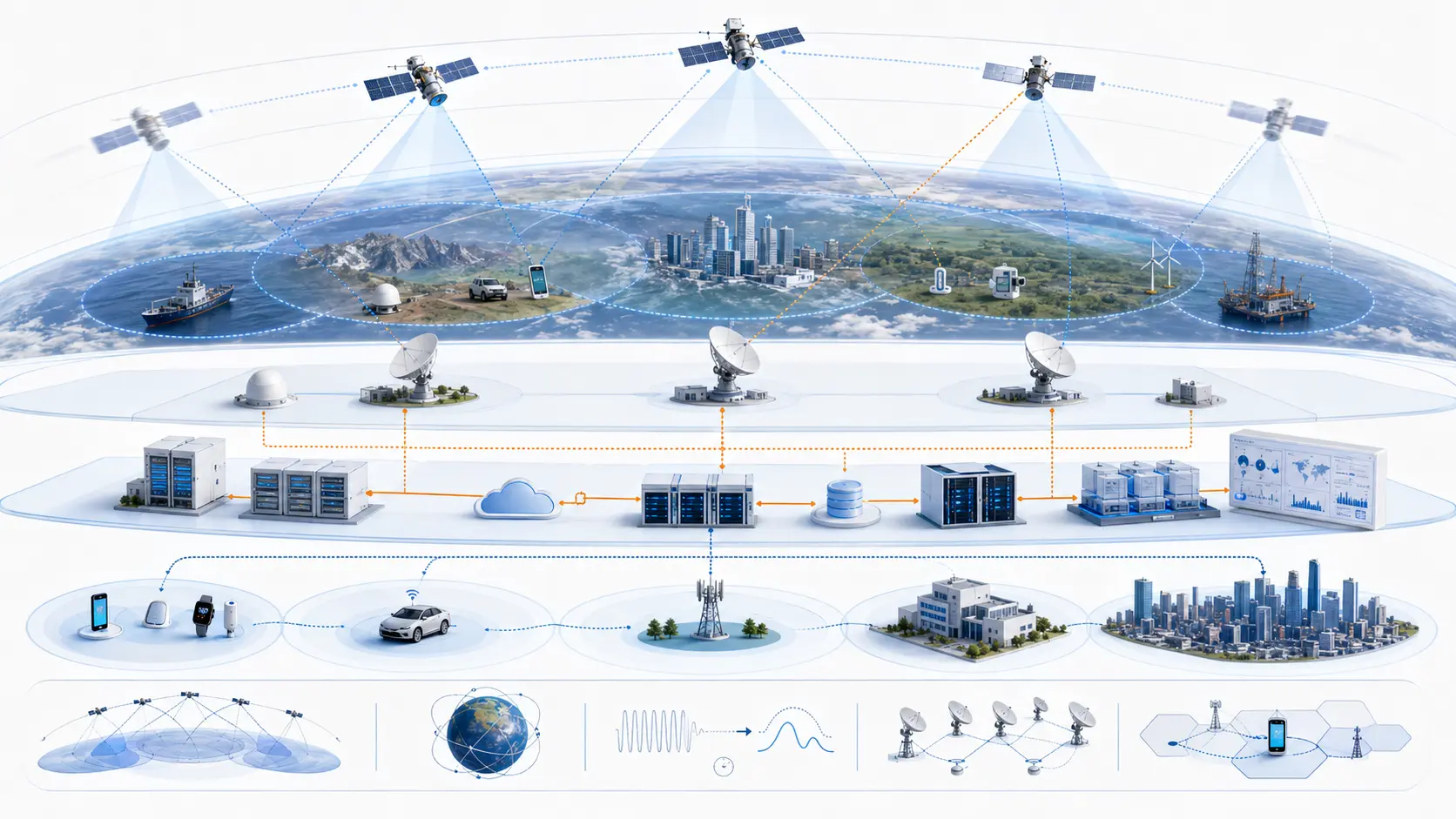
NTN service architecture connecting satellite payloads, gateways, 5G core, terrestrial networks and direct-to-device endpoints

END-TO-END SYSTEM VIEW

The satellite is only one part of the service.

A usable NTN experience depends on the complete chain: device capabilities, spectrum, orbital dynamics, payload, feeder link, gateways, core-network integration, service platform, location context and operational policy.

We evaluate the interfaces and failure modes across that chain—because a footprint on a map does not prove that a message was acquired, delivered on time or maintained through changing geometry.

MULTI-ORBIT CONTEXT

Different orbits. Different engineering consequences.

LEO

Lower latency and evolving direct-to-device ecosystems, with fast-moving beams, Doppler, frequent geometry changes and constellation-dependent availability.

MEO

Intermediate altitude, coverage and latency characteristics suited to selected navigation, broadband and resilient-connectivity architectures.

GEO

Persistent regional visibility and mature service models, balanced against long propagation delay, link-budget demands and constrained mobile-device geometries.

MEASURE THE SERVICE THAT EXISTS

Today: messaging and selected data experiences. Tomorrow: broader service continuity.

Consumer satellite-to-phone offerings now vary by operator, device, geography and service maturity—from emergency and two-way messaging to selected satellite-ready data applications. We validate the specific commercial service available on the tested device and plan rather than presenting roadmap capability as current performance.

The same methodology can evolve toward voice, data, IoT and mobility as commercial services mature: define the intended experience, instrument the device, preserve time and location, repeat under controlled conditions and report confidence—not anecdotes.
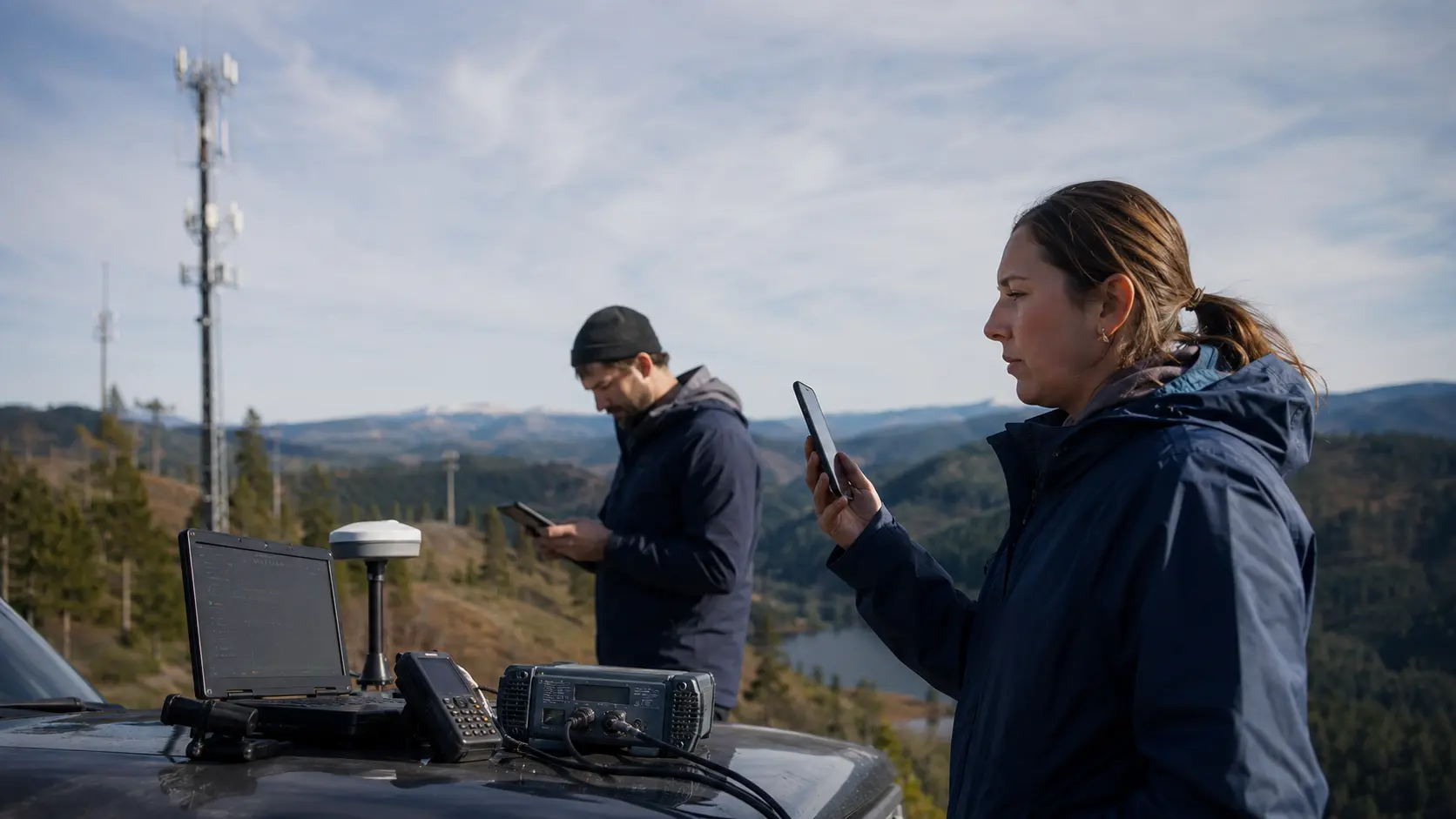
Engineers validating satellite-to-device messaging and hybrid network behavior in a remote field environment

APPLICATION ENVIRONMENTS

Connectivity where the terrestrial network becomes uncertain.

Utilities & Critical Infrastructure

Remote assets, restoration crews, telemetry fallback and resilience planning.

Emergency & Public Safety Support

Service-awareness and validation for communications outside terrestrial coverage.

Agriculture & Remote Operations

Large-acreage workers, equipment, sensors and operational messaging.

Maritime & Transportation

Route-dependent availability, mobility and hybrid service continuity.

Enterprise Resilience

Alternative-path planning, device readiness and business-continuity scenarios.

Telecom & Device Ecosystems

Interworking, acceptance methods, comparative testing and experience validation.